Completed
2026
Project Duration
3 months
Led a team of 5 to build a novel infrastructure that allowed cross-platform music content syncing without any transfer of copyrighted materials. We developed a technique to make sure the devices stayed in sync to nearly perfect latency such that the core effect of echo was created.
While a shared queue can be maintained and modified across all devices to be played through a single speaker, the system can also sync the audio output of every single device such that it sounds like one loud homogenous speaker.
The idea for Echo came with the abstract intention of creating belonging across our college and in our lives. Music had been with every moment that we remembered, so we figured "why not let everyone participate?" That's how Echo was born.
The domain justecho.us was selectively chosen not only for readability but to create a catchphrase: "just Echo us", that would become synonymous with using our platform to share moments with music.
Startup Competition

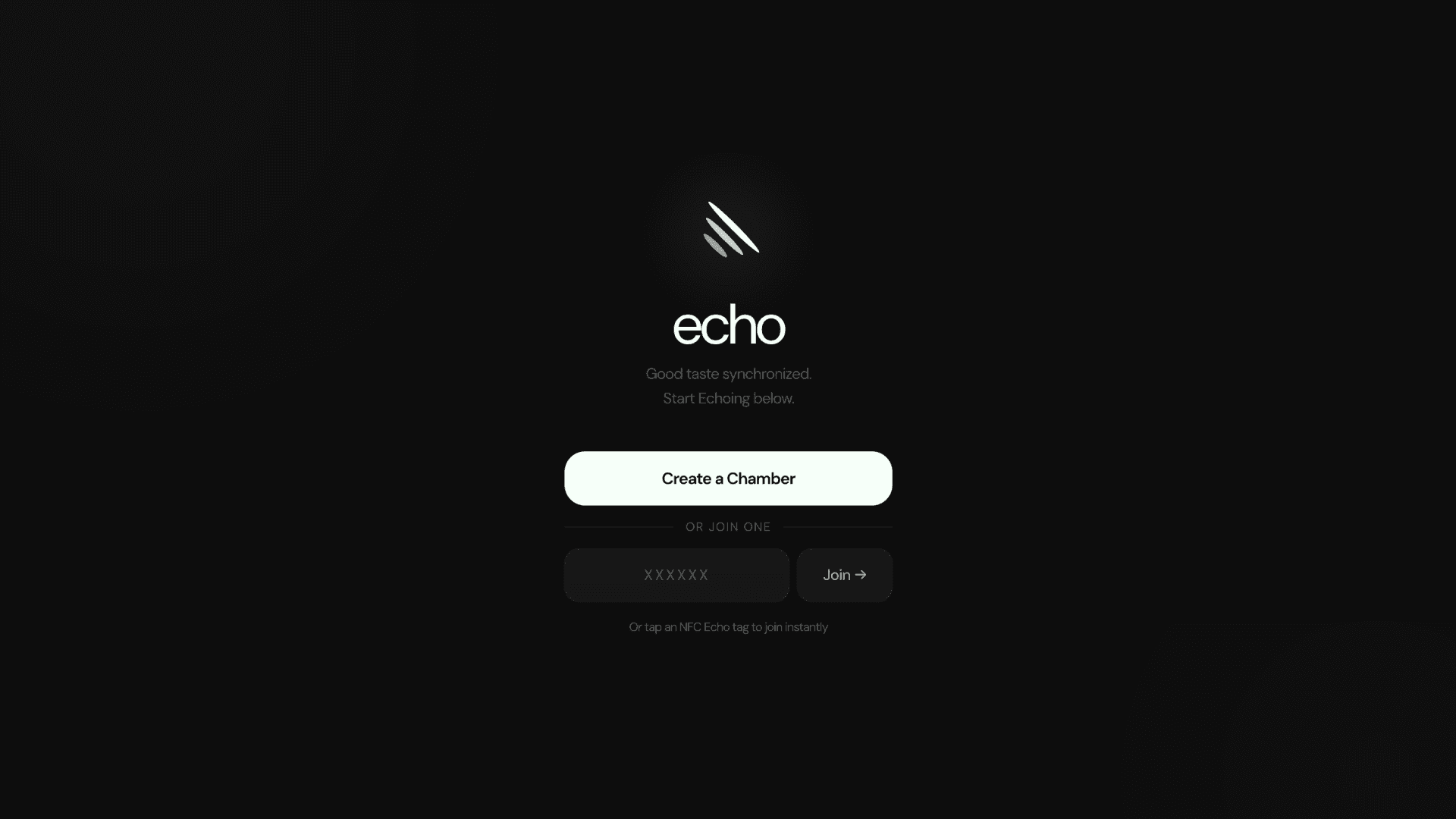
Every part of Echo had on-brand nomenclature. The landing page was made simple and clear to shorten the time from visiting our site and sharing music to keep you in the moment. "Good taste synchronized" became a short way to articulate the value that Echo provided.We called the shared spaces where content would be synced and friends would join, Chambers—for the broader concept of an echo chamber.
To keep people even more in the moment, we created a physical side to the product: an NFC tag. All people would have to do is tap their device and they'd instantly join the chamber to start playing music from their native app. The point of this was that our success metric was not how long they spent on our site, but how little time they had to spend before they could listen to music all together.
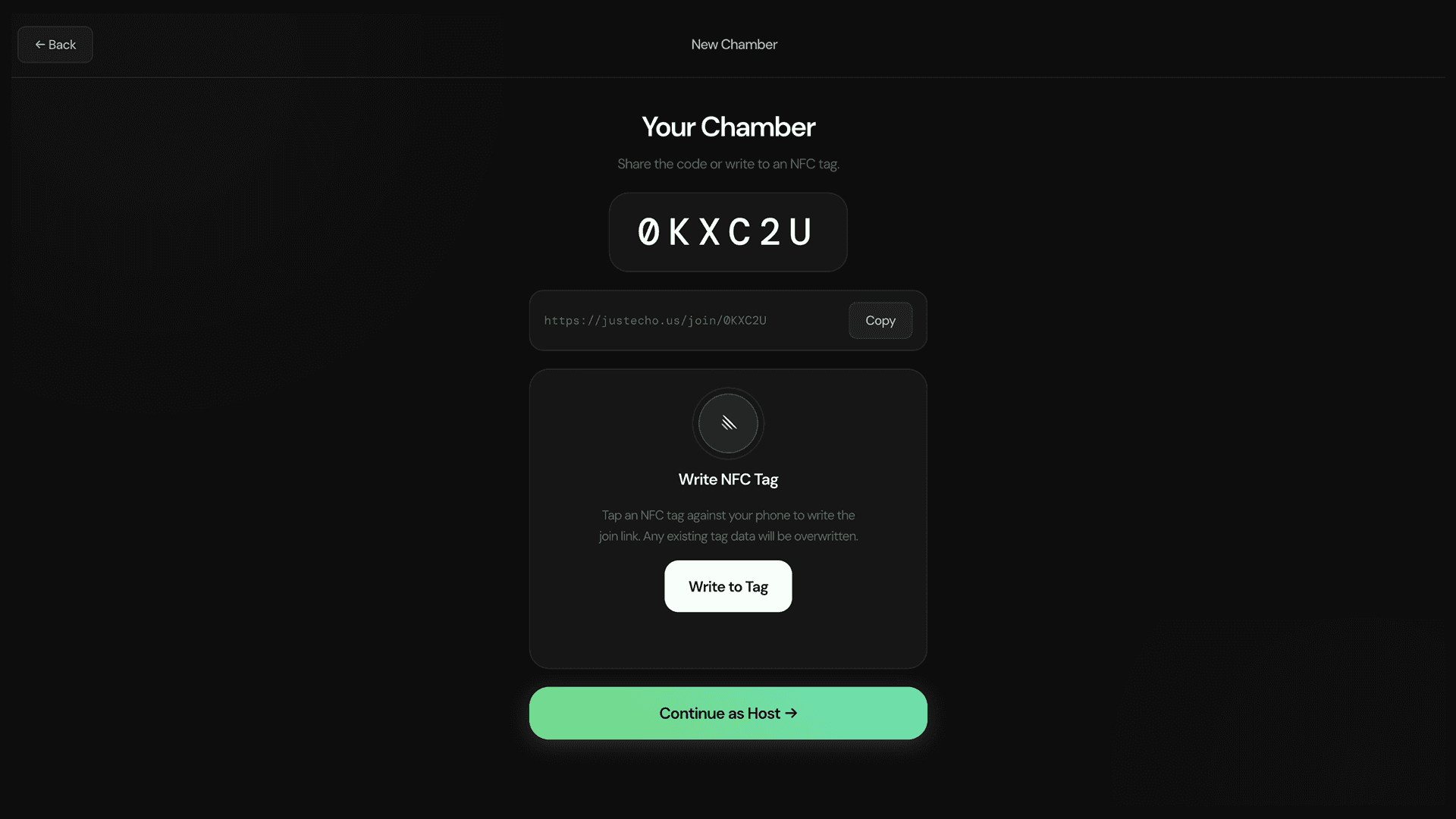
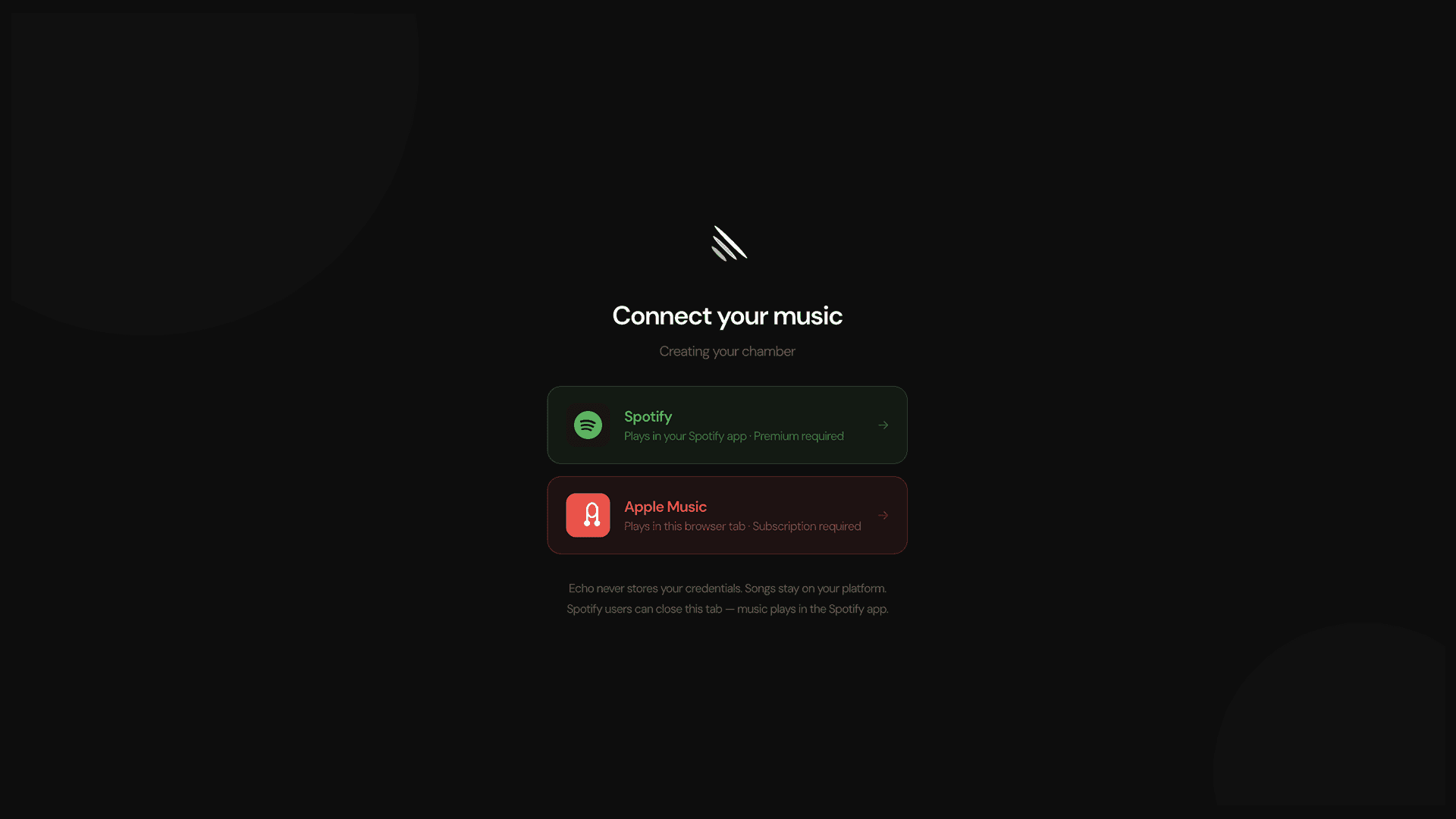
The login centered around only two main music platforms that make up around two-thirds of all listening providers: Spotify and Apple Music. We strategically chose these two platforms as they had the most established API and documentation and were the two platforms we had the most struggle with.
We didn't have people make a separate account on our platform. They could just use their listening account, which made the process seamless and went back to minimizing the time they had to spend before getting the utility of our infrastructure.
The syncing interface looked similar to other listening platforms, with the main song in full view. Our goal was simplicity and familiarity to get rid of any learning curves one might have had. The interface was also designed such that one could go back to their native listening app without having to stay on our website.
The bottom corner indicated the calculated delay between all the devices it uses for syncing. Another tab allowed people to see, move, and add to the shared queue, which would sync back to their listening app.